Where a performance limit originates — and how much room is left.
Data, not impressions.
Assessment and athlete profiling for clubs, federations and individual athletes — from sprints and jumps to team sports. Reliable, repeatable measurements, not impressions.
Tools
Vires suiteParallax calculator for sprint split times
Where to place the markers so that splits read from side-on video are corrected for parallax.
OpenLoad–velocity profile (sled)
From your sprints with and without a sled: the individual load–velocity line and the training zones (technique, speed-strength, power, strength-speed).
OpenJump & reactive strength
CMJ and SJ height from flight time, RSI and DRI in the 10/5 test, and optimal drop height from the incremental drop jump.
OpenAcceleration profile
From 10 m splits: how the athlete performs off the blocks and in transition relative to their own maximal velocity, the margin in seconds and where to act first.
OpenBlock setting from anthropometry
Distances computed from lower limb length, Cormic index and comparison with the current setting. Including the condition the data imposes: who the rule works for and who it does not.
OpenSprint force-velocity profile
Pick the distances you measured, from 30 metres up: the mono-exponential model returns the acceleration curve and the horizontal force-velocity profile — F0, V0, Pmax and mechanical effectiveness — with the residual of every timing gate.
OpenMore tools
Step-by-step running analysis, team profiles and others: we are preparing them and will publish them here.
Services
For clubs and athletesTeam testing day
A full battery on the field, an individual profile for every athlete, a report and a debrief with the coach. One day on the field, data that stays.
Sprint diagnostics
Blocks, acceleration, transition and maximal velocity: where the deficit actually begins.
Athlete profiling
The full picture of the qualities behind the performance — strength, speed, reactivity — and of how they show up in the movement itself.
Return-to-sport & testing
Test batteries and objective criteria for a gradual, safe return.
Analysis & reports
Professional reports with curves, indicators and clear reference values to read alongside the coach.
Education & speaking
Courses and talks for coaches on low-cost assessment of the sprinter.
Articles
In depthAnalysis and background on sprinting, jumping, athlete profiling and performance diagnostics, written for coaches and athletes.
Women's 100 m: the full report
Ten athletes filmed at 240 frames per second. The document delivered after the meeting, published in full and with initials only.
OpenMen's 100 m: the full report
The same thirteen pages on twelve athletes, with one DNF treated for what it is: complete data up to 60 metres, left out of the ranking.
OpenReading a sprinter's profile from 10 m splits
The normalisation that looks obvious and turns the ranking upside down, why one race is not enough, and why the transition is worth twice the start. Across 4,886 races.
ReadMore articles
We keep publishing our reasoned readings of race and test data. Leave your email and we'll let you know when the next one is out.
About us
Vires PerformanceVires Performance is a consultancy specialised in sports performance diagnostics. We work with clubs, coaching staff, athletes and federations to find where a performance limit originates and turn it into room for improvement — in sprinting and jumping in track and field as much as in team sports.
We combine cross-disciplinary expertise, a solid scientific foundation — in dialogue with international research — and the ability to bring it onto the field. That background was built in high performance, from professional Serie A football to international coach education with the Sports Authority of India, and in applied research. Data is not the destination: it is the instrument for deciding better, reducing injury risk and building development pathways that fit the individual.
In practice: all-round performance diagnostics for individual and team sports, velocity and biomechanics analysis, and direct coaching of track sprinters — with field testing, step-by-step biomechanical analysis, accurate kinematic analysis and estimated kinetics. We work out of Lombardy, with testing already carried out in Tuscany and Sicily and international work in India.
Rigour · integrity · presence
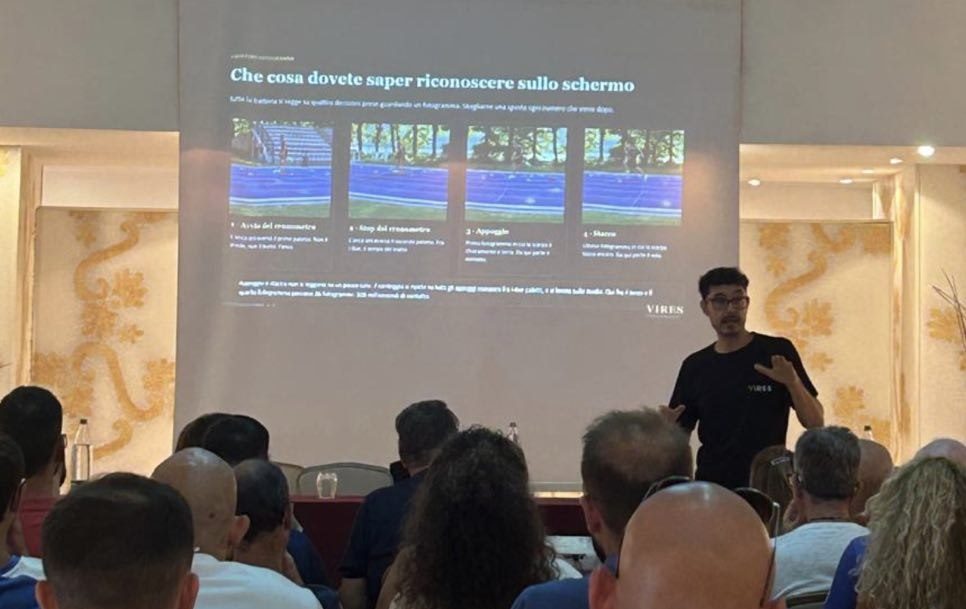
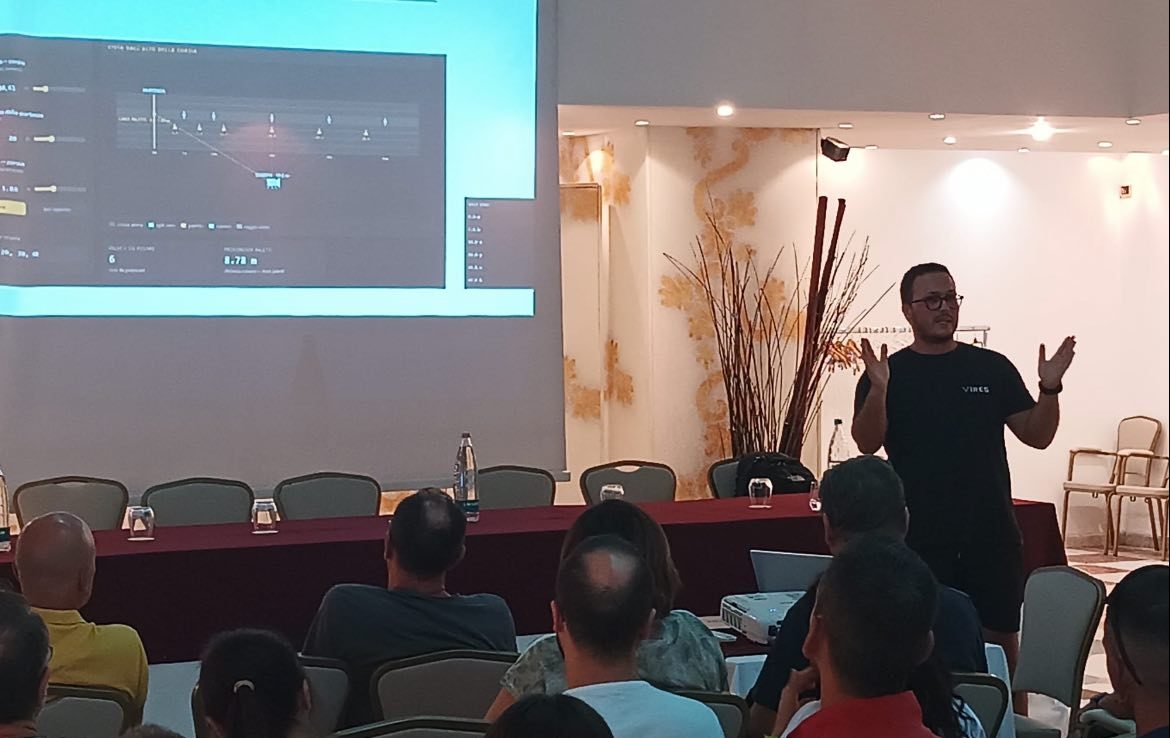
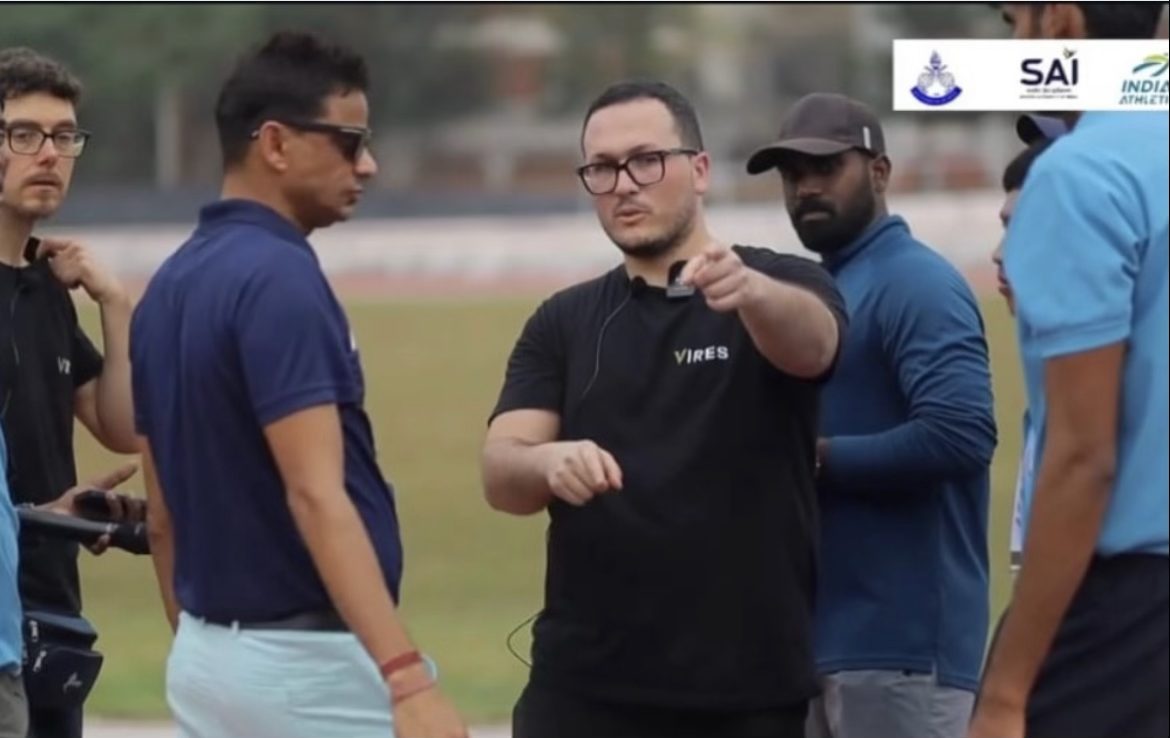
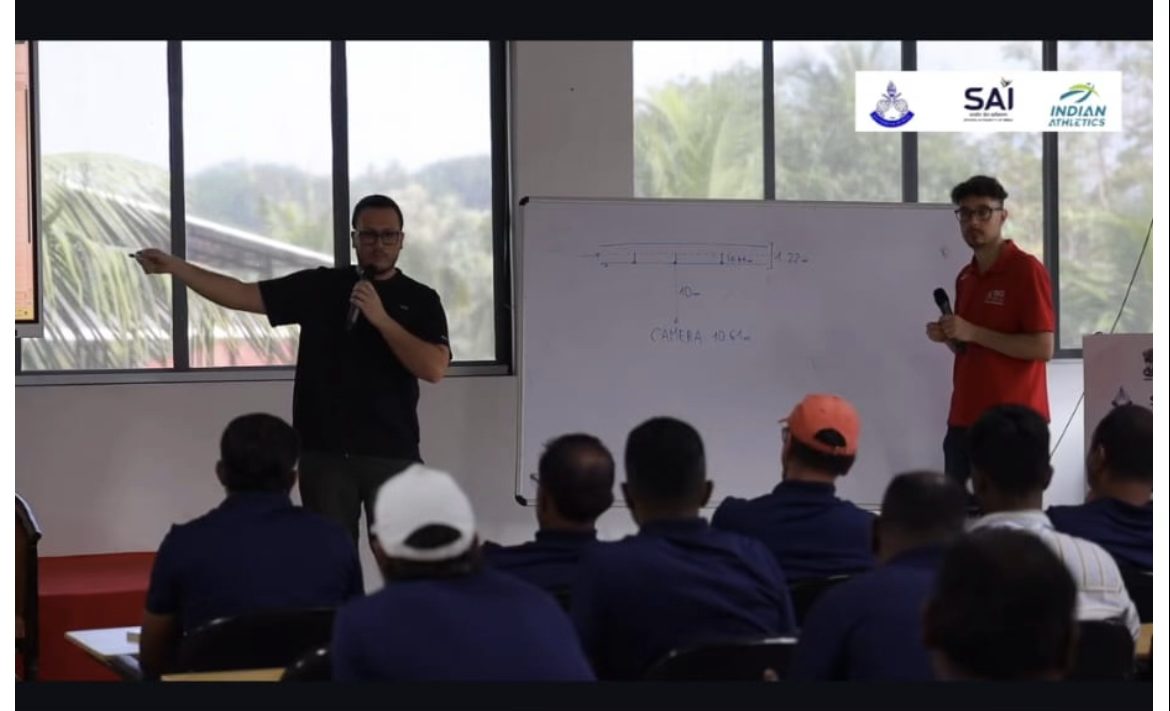
Rosario Condello
Sport scientist and strength coach specialised in sprinting, biomechanics and field-based functional testing. Master's degree in Sport Science, Technique and Teaching. Former technical director of a university gym, now S&C coach in track and field and sport scientist. He works closely with coaches, looking for answers through in-depth test-based analysis — and builds the tools that let coaches train better.
Talks: “Applied Biomechanics for Sprinting and Jumping” (Sports Authority of India, 2025); “Low-cost assessment methods for sprinters” (FIDAL Sicily, 2026).
Matteo Comi
Biomechanist and strength coach with experience in high performance and international coach education, specialised in field biomechanical analysis and physical preparation for sprints and jumps, working with youth, adult and elite athletes. BSc in Sport and Exercise Science (2019) and MSc in Sport Science, Technique and Teaching (2021); Periodization Sport Master Trainer certification (ISCI). International experience at pre-Olympic camps in Spain and Cuba with national athletics teams; since 2016 sprint coach (60–400 m) at Atletica Lecco – Colombo Costruzioni and consultant for Compex Italia. In 2022/2023 he worked in Serie A with Hellas Verona as youth S&C coach and first-team return-to-play specialist. In 2026 he was an international speaker at the strength and conditioning symposium for sprints and jumps in Kerala, India, invited by the Sports Authority of India and the Athletics Federation of India.
Data, not impressions
Every recommendation comes from measurements that are repeatable and comparable over time, not from what the eye thinks it saw.
Primary literature
Choices rest on the original studies and on validated criteria, keeping what can be cited separate from what is inference.
Low cost, high validity
Affordable instruments, checked against reference methods: low outlay, measurement rigour.
Research & collaborations
MethodVires's work joins field practice with research: a database of 4886 international races with 10 m splits for sprint profiling, the validation of low-cost instruments against reference methods, and coach education.
- Sprint biomechanics analysis at the FIDAL national meeting in Capo d'Orlando (15 July 2026): the reports are coming out.
- «Applied Biomechanics for Sprinting and Jumping» — invited lecture, Sports Authority of India, 2025.
- «Low-cost assessment methods for sprinters» — invited lecture, FIDAL Sicily, 2026.
- Biomechanical diagnostic framework based on indicators and stratifiers, in development on race data.
Let's talk about your athletes
Tell us who you work with and what you want to measure: we reply within a couple of days.